

The Mystery of “Volley Jin” (凌空勁)
The demonstrations of noted Taiji masters, particularly those performed on their own students, are often the subject of heated debates online. Even among those who have participated in such demonstrations, there is frequently confusion about what is happening and why.
My ongoing research into this topic began unexpectedly when I met Master Zhang Yonglian, the last Taiji master I would study under. He was renowned for his expertise in 凌空勁 (Líng Kōng Jìn), often translated as “Volley Jin” or “Empty Force.” His entire method was built upon this foundation.
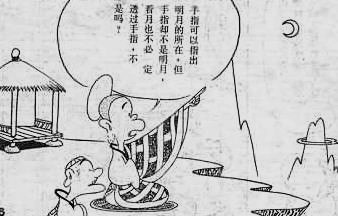
During our first few meetings, I let go of everything I thought I knew—over 30 years of Chinese martial arts practice, including 20 years of Taiji—to fully grasp something I found truly profound. This experience transformed the old stories of legendary masters from mere myths into tangible realities. What were once abstract concepts became something I could feel and understand firsthand.
Interestingly, the idea of “emptying one’s cup,” though never explicitly demanded, proved essential to the practice. It wasn’t about simply learning something new or adapting what I already knew. For me, it was a completely different process—one that made the phrase “用意不用力” (Yòng yì bù yòng lì), “use Yi, not force.” profoundly clear.
Master Zhang, like most traditional masters of his time, focused on practical application, development, and testing. He spoke as little as possible, instead allowing students to experience the full effects firsthand and correcting them only as needed. This approach encouraged students to arrive at their own realizations.
Perhaps part of the reasoning was that until one had developed sufficient skill, theoretical explanations alone would not help. In fact, they could even become a hindrance, causing a person to focus on their preconceived notions rather than mindfully observing and allowing the experience to unfold naturally—without conscious intent.
In this work, I share some of my findings regarding historical accounts, theories, noted practitioners, and commonalities in methods—all from a practitioner’s perspective.
I welcome any corrections or clarifications from those who are willing to share their insights or who have an interest in this subject.
windwalker
“Ling Kong Jing Song” 凌空勁頌
凌空而立,千峰之颠,吸纳天地精华。
聚于丹田,往来于脊骨,生生不息。
浑然一体,通达天地,故无所惧。
潜意意,意意潜,悟彻八卦玄机。
精气贯通,内外合一,彼此相应。
虚空皆可袭,万物皆可降,
无声无息,非兵器所能及。
天人合一,无往而不胜,无敌于天下。
Translation:
“Standing in the void, atop a thousand peaks,
Drawing in the essence of heaven and earth.
Gathered in the dantian, flowing through the spine,
An endless cycle of life and energy.
A seamless unity, connected to heaven and earth,
Thus, there is nothing to fear.
Hidden within the mind, the mind within the hidden,
Awakening to the profound mysteries of the Eight Trigrams.
Essence and energy flow unimpeded,
Inner and outer becoming one, perfectly aligned.
The void itself can be struck,
All things can be subdued,
Silent and without trace,
Beyond the reach of any weapon.
Heaven and humanity united as one,
Unstoppable in every endeavor,
Invincible under heaven.
It is unclear who originally wrote the “Ling Kong Jing Song.” Some attribute it to Master Wu Tunan, while others mention Wang Xiangzhai, the founder of the Yiquan martial system. The true author may never be known, and the text remains a subject of debate among martial historians.
For those who include 凌空勁 in their practice, this song may offer profound insights into its foundations.
Alternate Version Attributed to Wang Zongyue (王宗岳)
禄禅、班侯、梦祥间,三世心传凌空难。
我今道破其中秘,洞彻全豹反掌间。
只因传功皆口授,未尝公开告世人。
且幸恩师多倚重,教我其中步骤全。
如今说明其中义,节省时间又便传。
先须琢劲练到手,再练盪劲不费难。
透空诸劲都学会,哼哈运气亦练全。
彼此呼吸成一体,牵动往来得自然。
此时再学凌空劲,坚持功夫一二年。
手舞足蹈随心意,至此方叫功夫完。
Translation:
translation by Deepseek AI
“Between Lu Chan, Ban Hou, and Meng Xiang,
Three generations passed down the heart of the art—soaring through the void, a rare feat.
Now, I reveal its secrets,
Understanding the whole as easily as turning a palm.
Because this knowledge was always orally transmitted,
It was never openly shared with the world.
Fortunately, my teacher placed great trust in me,
Teaching me every step in full.
Now, I explain its meaning,
Saving time and making it easier to pass on.
First, refine your strength (劲, jìn) until it’s in your hands,
Then practice the swaying force (盪劲)—it won’t be difficult.
Master all the forces that penetrate the void,
And train fully in the哼哈 (hēng hā) breath energy.
Let your breath and movements become one,
Natural and effortless in every motion.
Only then, begin to learn the soaring force (凌空劲),
Persist in your practice for a year or two.
When your hands and feet move as your heart desires,
Only then can your skill be called complete.”
New chat

 empty circle taiji